Know the Fish
Cynoscion nebulosus — the spotted seatrout — is the most widely targeted inshore saltwater species on the US Gulf and South Atlantic coasts. Knowing its biology explains why it behaves the way it does.
Biology and Distribution
Spotted seatrout are a member of the drum family (Sciaenidae), closely related to redfish, black drum, and weakfish. They're found from the Chesapeake Bay to South Texas, with the heaviest populations in Florida, the Gulf states, and the Texas bays.
Maximum size is around 10 lbs (record is 17.7 lbs from Virginia in 1977), but fish over 5 lbs are genuine trophies across most of their range. Gulf Coast fish tend to run larger than their Atlantic counterparts. Florida seatrout average 14–20 inches; Texas and Louisiana fish are similar. The "gator trout" designation (typically fish over 5–6 lbs) is a culture and a goal for most Gulf Coast inshore anglers.
Spotted seatrout are relatively sedentary compared to most saltwater game fish — they don't undertake long migrations. They move with water temperature: shallow in mild months, deeper in extreme heat and cold. A fish caught on a grass flat in October may be in a 12-foot basin hole 200 yards away in December, and back on the flat in March. Understanding this local movement is the key to finding fish when conditions change.
Habitat and Structure
Spotted seatrout are grass-flat specialists. Seagrass meadows (mainly turtle grass, shoal grass, and manatee grass) hold the shrimp, glass minnows, pinfish, and mullet that make up their diet. Not all grass is equal:
- Patchy grass with sand holes: The most productive. Trout ambush from the grass edge; baitfish concentrate in the open sand pockets.
- Sparse, dying grass: Low productivity. Bait doesn't hold there; neither do trout for long.
- Thick continuous grass: Fish use it but it's harder to work a lure through without fouling. Topwater lures work better here than subsurface.
- Grass edges bordering deeper water: The highest-value transition zone. Trout park on the flat at high tide, then pull back to the edge on the drop. Fish the edge on the falling tide.
Non-grass structure that consistently holds seatrout: oyster bars, dock pilings with current flow, hard-bottom shell rubble, and any channel edge adjacent to shallow flats. Night-time: lighted docks and bridges where baitfish (especially glass minnows) are attracted to the light — trout stack in the shadow lines.
Feeding Behaviour and Why It Matters
Spotted seatrout feed predominantly on shrimp and small fish (pinfish, pigfish, glass minnows, mullet finger). The key behavioural fact: they are ambush feeders, not active chasers. They hold in a position with current or tide pushing bait toward them, then strike. This makes tidal movement the single most predictable trigger for when they're catchable.
The "knock" of a seatrout strike — a hard, single head-knock followed by a run — is distinctive. They will often knock a lure once without hooking up; if this happens, pause the retrieve for 2–3 seconds before resuming. Many anglers set the hook on the knock and miss the fish. Wait for the weight.
Seasons & Locations
Water temperature drives seatrout behaviour more directly than moon phase or season label. Follow the thermometer, not the calendar.
Seasonal Calendar
| Season | Water temp | Where fish are | Best tactics |
|---|---|---|---|
| Winter (Dec–Feb) | 48–65°F (Gulf); 45–62°F (Atlantic) | Deep holes, basin edges, ICW channels; out of the wind | Slow-sinking lures, live shrimp on a Carolina rig; fish the warmest water available |
| Spring (Mar–May) | 62–75°F | Moving back onto grass flats as temp rises; spawning starts mid-spring | Topwater (early morning), soft plastics; fish the rising-tide push onto warm, shallow flats |
| Summer (Jun–Aug) | 78–92°F | Dawn/dusk on flats; midday in deeper water (8–12 ft); night fishing at lights | Night fishing most productive; dawn topwater window closes by 8am; live shrimp at night |
| Fall (Sep–Nov) | 65–78°F | Back on the flats full-time; most aggressive feeding before winter | Best all-round season; topwater, soft plastics, live bait all produce |
Regional Notes
| Region | Peak season | Notes |
|---|---|---|
| Florida Gulf (Tampa Bay, Charlotte Harbor, Florida Bay) | Oct–Apr (winter peak) | Year-round fishery; "gator trout" most common; Tampa Bay holds large fish in ICW channels in winter |
| Florida Panhandle (Pensacola, Destin, Apalachicola) | Sep–Apr | Cold snaps push fish deeper; spring and fall best for flats fishing; Destin spot page |
| Louisiana (Calcasieu Lake, Grand Isle, Lake Borgne) | Mar–Nov | Calcasieu ("Cal Lake") produces trophy trout consistently; fishing year-round but peak is fall |
| Texas (Baffin Bay, Laguna Madre, Galveston Bay) | Oct–Mar (trophy season) | Baffin Bay is famous for giant trout in winter; shallow, cold, wind-influenced water; wading is most productive |
| South Atlantic (GA, SC, NC) | Apr–Oct | Shorter season; fish moving north in spring; weakfish overlap in northern range |
Tide Triggers
Tidal movement is the most reliable predictor of a spotted seatrout bite. Not all tidal phases are equal:
- Incoming tide (flood): Water pushes onto the flat, carrying shrimp and baitfish. Trout move shallower with the push. Fish the advancing water edge — where the tide meets the flat.
- Peak high tide (slack): Often a dead period on shallow flats. Fish have spread out across the flat; current stops. Use slack to relocate to a drop-off or channel edge.
- Outgoing tide (ebb): Bait is funneled through natural bottlenecks — creek mouths, cuts, channel edges. Trout stack here to ambush. The last 2 hours of the outgoing and the first hour of incoming are typically the two best windows of the tidal cycle.
- Low tide slack: Fish compressed into the few remaining deep pockets on shallow flats. Sometimes a dead period; sometimes extremely concentrated and productive if you find the hole.
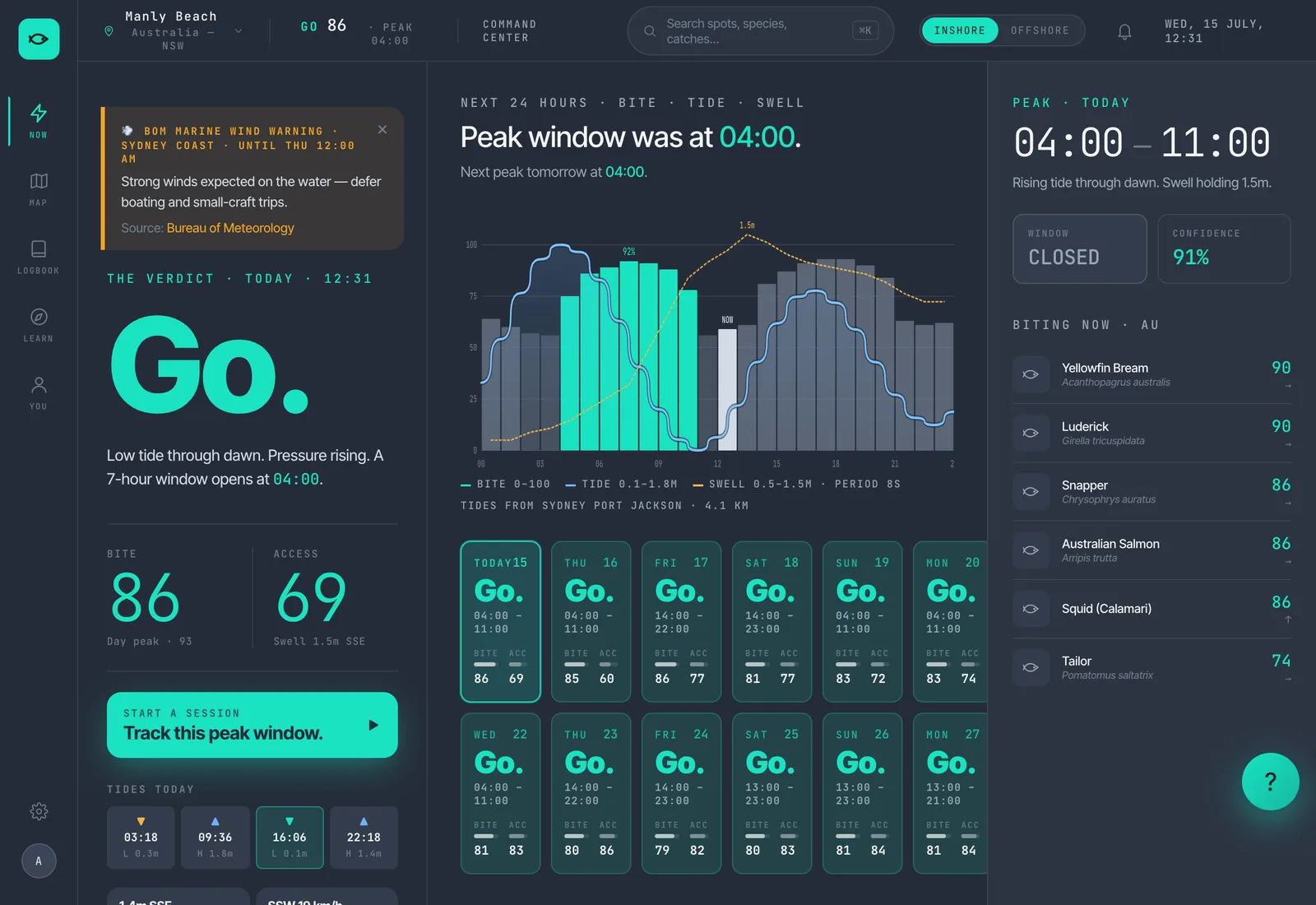
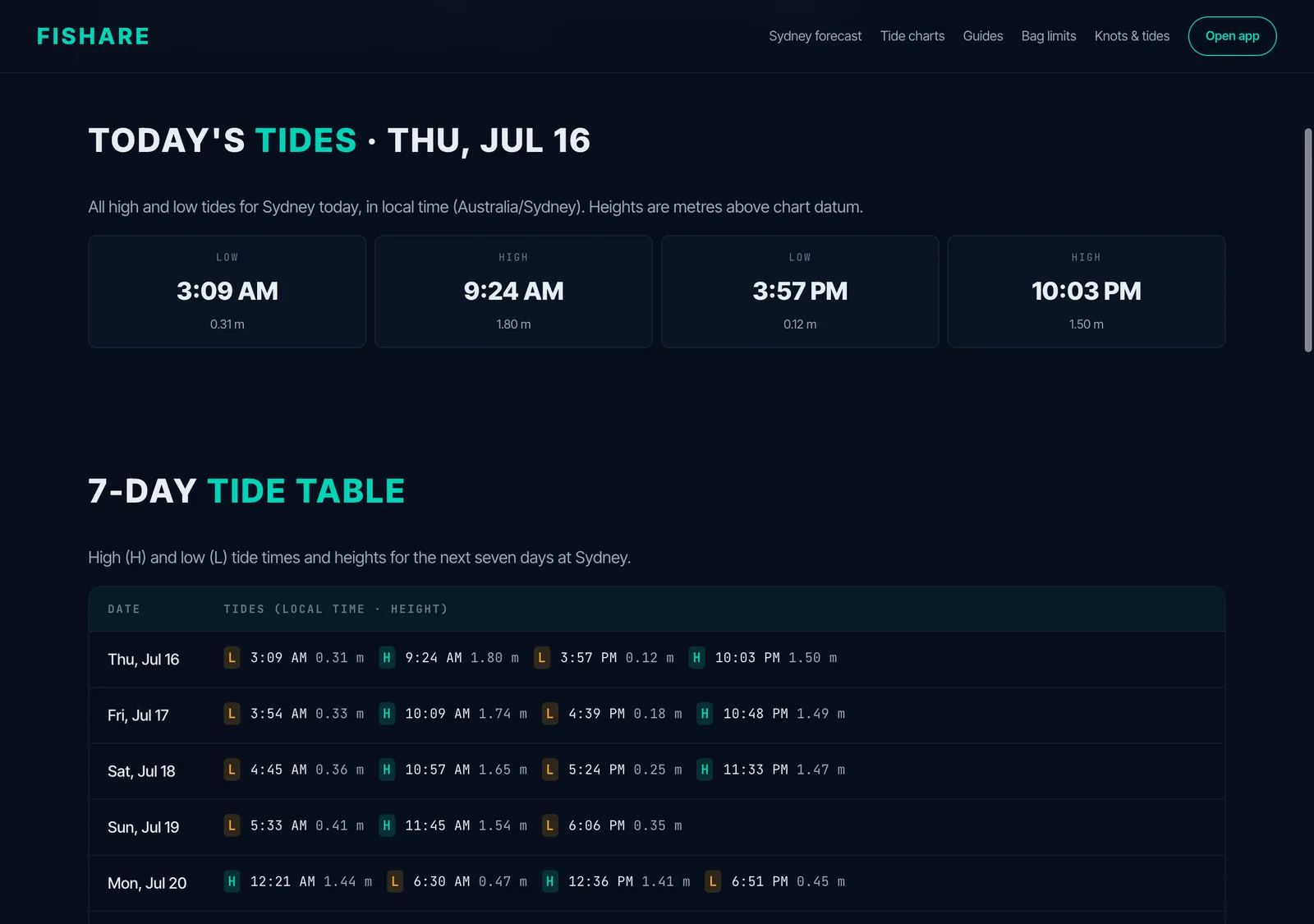
Strong spring tides (full moon, new moon) amplify these windows. Neap tides (quarter moon) produce reduced tidal movement and slower fishing on most days. The spotted seatrout conditions page shows current tidal phase and the next 14 days of tide windows at your chosen location.
Bait, Lures & Rigs
Spotted seatrout are not line-shy or gear-shy. The right presentation at the right depth at the right time of the tidal cycle matters more than brand loyalty.
Live Bait
Live shrimp — the universal answer
Live shrimp is the most effective and most versatile spotted seatrout bait across all seasons, regions, and conditions. Hook through the second segment of the tail (not the head, which kills the shrimp quickly) with a 1/0 or 2/0 short-shank hook. Presentation:
- Free-lined (no weight): In 1–4 ft of water over a flat. Let the shrimp swim naturally; occasional twitch to attract attention. Most natural presentation; seatrout hit it aggressively.
- Under a popping cork: Classic Gulf Coast setup. A 1/2 oz rattling popping cork keeps the shrimp 18–36 inches above the bottom. Pop the cork with the rod tip to attract fish from distance, then pause. Trout attack the shrimp on the pause. Set the depth based on water depth — shrimp should be 6–12 inches above the grass.
- Carolina rig: 3/8 oz egg sinker above a barrel swivel, 18–24 inch 20 lb fluorocarbon leader, 1/0 circle hook. For deeper water (8–15 ft) in winter or summer midday. Drag slowly across the bottom.
Pinfish and pigfish
Live pinfish and pigfish (grunts) are premium trout bait for larger fish. Hook through the back, just forward of the dorsal fin, on a 2/0 or 3/0 circle hook. Free-line in 4–8 ft of water near structure. Gator trout almost always eat these over a shrimp.
Soft Plastics and Hard Lures
Soft plastic paddle tails
The most versatile and productive artificial for seatrout across all conditions. A 3-inch or 4-inch paddle tail (Gulp Alive Shrimp, Z-Man Diezel MinnowZ, Bass Assassin, Vudu Shrimp) on a 1/4 to 3/8 oz jig head. The retrieve:
- Slow roll: Steady retrieve just above the grass. Most effective in clear water when fish can track the lure visually.
- Hop and drop: Cast, let sink to grass level, lift the rod tip 12–18 inches, pause 2–3 seconds as the lure falls. Strikes come on the fall. Most effective in murky water or on active fish.
- Scull drag: Cast, let sink all the way to the bottom, then drag slowly across the bottom (not hop — drag). Most effective in cold water when fish are lethargic.
Topwater lures
Walk-the-dog style topwater lures (MirrOlure She Dog, Heddon Super Spook Jr., Rapala Skitter Walk) are the most exciting method and work during the low-light window — first 45 minutes of light at sunrise, last 45 minutes at sunset. Seatrout are highly visual predators in low light; they'll track a topwater 10–15 feet and crush it.
Use topwater when: water is calm (wind under 10 knots), visibility good, temperature above 65°F. Don't set the hook until you feel the weight of the fish — many anglers yank the lure away from the fish on the strike.
MirrOlure hard jerkbaits
The MirrOlure 52M is a slow-sinking twitchbait that has caught seatrout for 70 years. Works in cold water when soft plastics fail. Twitch-pause-twitch-pause on 17 lb mono or 20 lb fluorocarbon. The slow sink rate keeps it in the strike zone longer than most lures.
Rigs
Components: Rattling popping cork (Cajun Thunder or similar) · 18–36 inch 20 lb fluorocarbon leader · 1/0 circle hook or #1 short-shank · Live shrimp or 3-inch Gulp Shrimp
Use: The most effective rig for fishing live shrimp over grass flats from Texas to Florida. Depth of the leader sets where the shrimp swims. Pop the cork to attract, pause 3–5 seconds for the take. On a live shrimp, let the fish move off before sweeping the hook.
Components: 1/4 oz or 3/8 oz round-bend jig head (Owner or Gamakatsu) · 3–4 inch paddle tail or shrimp-style soft plastic · No additional hardware
Use: Tie directly to 17–20 lb fluorocarbon (no swivel). Cast to structure edges, grass pockets, or drop-offs. The jig head weight determines how fast it sinks — adjust to keep the lure in the bite zone without fouling the grass. Most versatile seatrout rig.
On the Water
The difference between an average day and a great day is usually a timing decision made the evening before. Here is how to make it.
Dawn and Dusk Windows
Spotted seatrout are most active in low light. The first and last hours of sunlight are consistently the highest-producing periods, regardless of season. During summer, the dawn window is often the only time surface-feeding trout are catchable before water temperature drives them deep.
On a tidal flat, the best days combine a tidal push (incoming or peak outgoing) with the low-light window. When that combination aligns — first light with an incoming tide — the bite can be exceptional. When first light hits a slack tide, the window is shorter. Check the spotted seatrout forecast page to see when these windows converge over the next 14 days.
Night Fishing at Docks and Lights
Lighted docks and bridges are seatrout magnets at night from May through September in most Gulf states. Glass minnows are attracted to the lights; pinfish follow; seatrout and snook stack in the shadow lines adjacent to the light to ambush the bait.
Fish the shadow edge — not inside the light, where the fish can see you. Cast a free-lined live shrimp or a small paddle tail (Z-Man 3-inch on a 1/8 oz jig head) into the lit zone and work it slowly into the shadow. The strike comes in the transition.
Cold Fronts and How to Fish Them
A cold front passing through is a two-phase event for seatrout fishing:
- Pre-front (12–24 hours before): Often the best bite of the month. Barometric pressure is dropping, winds switching south. Fish seem to anticipate the change and feed aggressively. Work the edges and channels before the front arrives.
- During the front: Winds shift north-northwest; temperature drops. Trout go deep and stop feeding. Don't fight it.
- Post-front Day 1: Water still cold and clearing; fishing slow. Stick to the deepest holes (12+ ft) where temperature stabilises fastest.
- Post-front Day 2–3: Warming back up, fish coming out of the holes onto basin edges. The first warming flat after a front is where the fish will be — they move to warm up before they move to feed.
Reading Conditions Before You Go
The three numbers that define a spotted seatrout day: water temperature (target 62–80°F), tidal phase (moving water beats slack), and wind speed and direction (under 12 knots means accessible grass flats; over 15 knots means wave action muddies the water and kills the visual bite).
The Florida Keys, Tampa Bay, Galveston, and Destin spot pages on Fishare show wind, wave height, tide, water temperature, and a bite score on one map — so you can check all three variables in one place, with a 14-day time slider to find the best window before you book the lodge or load the kayak. The bite score model is trained on external catch databases including NOAA MRIP data, so it reflects what conditions have actually produced catches — not a generic moon table.